





Arif Habib Group and Pakistan International Airlines (PIA): A Landmark Shift in Pakistan’s Aviation and Privatization Landscape
The recent acquisition of Pakistan International Airlines (PIA) by a consortium led by the Arif Habib Group marks a pivotal moment in Pakistan’s economic and aviation history. After decades of state ownership, chronic financial losses, and structural challenges, the national airline is finally transitioning into the private sector — a shift that could redefine its future and reshape Pakistan’s broader economic reform trajectory.
This article explores the background of the Arif Habib Group, the struggles of PIA, the privatization process, and the implications of this historic deal.
Arif Habib Group and Pakistan International Airlines (PIA): A Landmark Shift in Pakistan’s Aviation and Privatization Landscape
Who Is Arif Habib and What Is the Arif Habib Group?
Arif Habib is one of Pakistan’s most prominent and influential businessmen, widely recognized for his leadership in financial services and diversified investments across major economic sectors. The Arif Habib Group is a conglomerate that primarily operates through Arif Habib Corporation Limited (AHCL) and its affiliated companies. Over decades, the group has built a robust portfolio in capital markets, corporate investments, real estate, manufacturing, and financial services.
While traditionally known for its core strengths in investment banking and capital market services, the group’s influence has expanded into industrial and strategic sectors, making it one of the most respected and financially powerful business groups in the country.
Arif Habib’s leadership style and business philosophy emphasize long‑term value creation, strategic diversification, and disciplined corporate governance, which are critical in managing complex enterprises. His business experience has now been tested on a much broader national stage with the acquisition of PIA — an institution that carries not just economic but also symbolic importance for Pakistan.
Pakistan International Airlines: Legacy and Challenges
Pakistan International Airlines (PIA) has long been a national symbol and one of Asia’s pioneering carriers. Founded shortly after the country’s independence, PIA was once known for its high quality service and operational excellence, earning acclaim domestically and abroad. For decades, it maintained an extensive network of international and domestic routes and remained a source of national pride.
However, in recent decades, the airline faced mounting operational and financial struggles. Chronic losses, inefficiencies in management, outdated fleets, political interference, and heavy debt burdens eroded the airline’s commercial viability. For years, the airline operated at a loss, trudging under unsustainable financial weight and relying on periodic government bailouts to remain afloat — a cycle that proved increasingly untenable.
By 2024, PIA’s debt and liabilities had ballooned, prompting policymakers and economists to consider privatization as a serious reform measure.
Why Privatization?
PIA’s privatization is part of a broader effort by the Government of Pakistan to reform loss‑making state‑owned enterprises (SOEs) and reduce the fiscal burden they place on public finances. International financial institutions like the International Monetary Fund (IMF) have also encouraged such reforms to stabilize Pakistan’s macroeconomic position.
Privatization was seen as a way to:
Inject private‑sector efficiency, accountability, and capital into PIA,
End decades of financial losses and recurring bailouts,
Foster long‑term operational sustainability, and
Stimulate broader confidence in Pakistan’s investment climate.
Given PIA’s deep financial wounds — including large legacy debt and structural inefficiencies — privatization has been a contentious and politically sensitive topic. Attempts in the past were delayed or stalled due to opposition from labor unions and political stakeholders.
The Historic Bid and Arif Habib’s Consortium
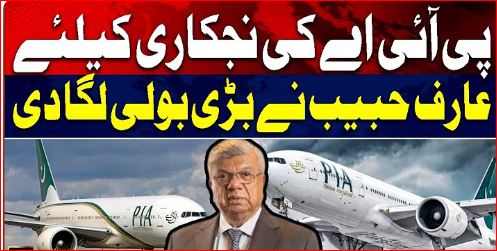
After a lengthy and transparent bidding process, a consortium led by the Arif Habib Corporation Limited emerged as the successful bidder to acquire a 75% controlling stake in Pakistan International Airlines. The consortium submitted the highest and winning bid of Rs 135 billion (about $482 million), outbidding other major contenders, including a group led by Lucky Cement Limited.
The consortium includes a coalition of prominent Pakistani business entities such as:
Arif Habib Corporation Limited — the leading investor,
Fatima Fertilizer Company Limited,
City Schools (Private) Limited, and
Lake City Holdings (Private) Limited.
This private ownership stake marks a significant shift from state control to a model where private investors are expected to manage and revitalize an important national asset.
Under the terms of the sale, the government initially retains a 25% share of the airline. However, the consortium has expressed interest in potentially acquiring this remaining stake within a defined timeframe, which would transform PIA into a fully private entity.
Plans for PIA’s Future Under New Ownership
The new ownership group — with Arif Habib at its helm — has articulated ambitious plans to modernize and expand the airline’s operations. Among these plans are:
Fleet Expansion
The consortium intends to expand PIA’s fleet significantly. Initially, the airline plans to increase its aircraft count to 38 planes, with subsequent expansion to 64 aircraft in later phases. This would substantially enhance PIA’s operational capacity and global connectivity.
Financial Restructuring
Given PIA’s legacy challenges, the group plans to inject fresh capital for operational upgrades, fleet modernization, and strategic route expansion. The structure of the deal ensures that a substantial portion of the funds from the sale is reinvested into the airline directly — rather than being extracted as profit.
Employment and Operational Continuity
Despite the change in ownership, the consortium has pledged not to lay off employees for at least one year — a move aimed at ensuring stability during the transition period. Many of PIA’s staff have expressed concerns about job security amidst privatization, making this pledge an important reassurance.
Seeking Strategic Partners
While the Arif Habib Group leads the consortium, it is actively seeking strategic partnerships with global aviation players to bring additional expertise, resources, and international standards to PIA’s operations. This could include airline partnerships or technical collaborations to enhance efficiency and global competitiveness.
Economic and Symbolic Significance
The privatization of PIA is not only an economic transaction; it holds symbolic importance. For many Pakistanis, PIA has long stood as a symbol of national identity — a carrier that once represented Pakistan’s aviation prestige. Its transition to private ownership underscores a paradigm shift in how national assets are managed, signaling a new era of accountability, corporate governance, and private‑sector engagement.
It also marks one of the largest privatization deals in Pakistan’s history, potentially setting a precedent for other state enterprises struggling under financial duress.
Challenges and Prospects Ahead
Despite the optimism surrounding the deal, several challenges remain:
Operational Turnaround — Reviving PIA’s vast network of domestic and international routes will require disciplined financial management and operational excellence.
Debt Legacy — While some liabilities were restructured before the sale, the legacy of past debt and operational inefficiencies will continue to impact financial planning.
Market Competition — PIA will need to compete with established global carriers and regional airlines that have invested heavily in customer service, new aircraft, and technology.
Regulatory and Infrastructure Issues — Enhancing airport infrastructure, slot allocation, and compliance with international aviation standards will be crucial to long‑term success.
Yet, the corporate vision led by Arif Habib emphasizes strategic investment and incremental modernization — potentially transforming PIA from a historically loss‑making national carrier into a viable and competitive player in the global airline industry.
Conclusion
The acquisition of Pakistan International Airlines by the consortium led by the Arif Habib Group represents a major milestone in Pakistan’s economic and aviation history. It reflects a bold shift toward privatization, aiming to correct years of financial inefficiencies and operational stagnation. With ambitious plans for modernization, fleet expansion, and strategic growth, the new ownership hopes to restore PIA’s relevance both domestically and internationally.
The coming years will be crucial as the consortium implements its long‑term plans, negotiates strategic partnerships, and strives to transform one of Pakistan’s most iconic institutions into a profitable, modern airline. If successful, this could not only reshape Pakistan’s aviation sector but also become a model for future reforms in other state‑run enterprises.