



Merit, Politics and the Road to 1971
*Merit, Politics and the Road to 1971*
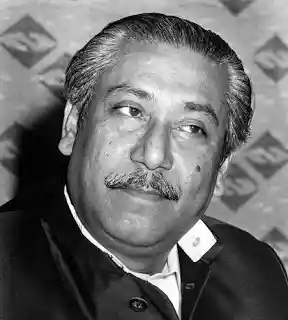
Sheikh Mujibur Rahman’s “The Unfinished Memoirs” offers valuable insights into the political developments that eventually led to the separation of East Pakistan and the birth of Bangladesh on December 16, 1971. While the Bangladesh Liberation War marked the final stage of the crisis, the roots of the conflict went back to the early years of Pakistan. One of the major reasons was the repeated neglect of merit in favour of personal loyalties, political favouritism and elite interests.
History shows that when merit is ignored, institutions lose credibility and public confidence begins to fade. This creates political instability and weakens national unity. The creation of Bangladesh stands as one of the clearest examples of the consequences of such policies. The separation of East Pakistan resulted from longstanding political, economic and linguistic grievances, which eventually developed into a military conflict involving India.
In his memoirs, Sheikh Mujibur Rahman recalls that Khawaja Nazimuddin, who later succeeded Quaid-e-Azam Muhammad Ali Jinnah, had been defeated by A. K. Fazlul Haq in the 1946 elections in Patuakhali. Following this defeat, Nazimuddin was left with little political future. It was Huseyn Shaheed Suhrawardy, who had won two seats in the election, and vacated one of them to enable Nazimuddin to return to the legislature. Mujib’s account suggests that, based on political ability and public support, Suhrawardy was a stronger candidate to succeed Jinnah than Nazimuddin.
Mujib also describes the political awakening of Bengali Muslims during the first half of the 20th century. He identifies three leading figures of the period; A. K. Fazlul Haq, Huseyn Shaheed Suhrawardy and Khawaja Nazimuddin, all of whom served as Prime Ministers of Bengal under the British rule. According to Mujib, Suhrawardy was the most capable of the three. He possessed greater political vision, a better understanding of history and recognised earlier than others that the Muslims of Bengal had to become an active part of the movement for Pakistan. Although he rose to prominence later than the other two leaders, his contribution to the Pakistan Movement was perhaps the most significant.
After independence, however, Suhrawardy became deeply disappointed with the direction taken by the Muslim League. The party, in his view, had drifted away from the people and become dominated by landlords, bureaucrats and political elites. To challenge this growing centralisation and authoritarianism, Suhrawardy joined hands with Maulana Abdul Hamid Khan Bhashani, Shamsul Huq and Sheikh Mujibur Rahman to establish the East Pakistan Awami Muslim League in June 1949.
Mujib also points out that during Khawaja Nazimuddin’s tenure as Prime Minister of Bengal, none of Suhrawardy’s supporters was given a ministerial post or even appointed as a parliamentary secretary. Those who had played an important role in the Pakistan Movement found themselves excluded from positions they believed they had earned.
Ironically, Nazimuddin himself later became a victim of political injustice. On April 17, 1953, despite enjoying a parliamentary majority and having successfully passed the national budget, his government was dismissed overnight by Governor-General Ghulam Muhammad through the use of extraordinary reserve powers.
The dismissal, justified on the grounds of food shortages and the anti-Ahmadi disturbances in Lahore, is widely regarded as one of the earliest examples of extra-constitutional intervention in Pakistan’s politics.
Many historians argue that Pakistan’s early political history should be examined more critically and based on primary historical sources rather than official narratives. They believe that younger generations deserve a balanced and factual understanding of the Pakistan Movement, including the important role played by Bengali Muslim leaders and the people of East Bengal.
The contribution of Bengal to the creation of Pakistan was indeed substantial. Under the leadership of Huseyn Shaheed Suhrawardy, the Muslim League won a decisive victory in the 1946 provincial elections in Bengal. This demonstrated overwhelming support among Bengali Muslims for the demand for Pakistan and weakened the Indian National Congress’s claim to represent all communities. Suhrawardy’s government also declared August 16, 1946 as Direct Action Day after the rejection of the Cabinet Mission Plan, reflecting the determination of Muslims across British India to pursue their political objectives.
Another major contribution came from A. K. Fazlul Haq, who presented the historic Lahore Resolution of 1940, later known as the Pakistan Resolution. As the leading politician from the largest Muslim-majority province, his support gave the demand for a separate Muslim homeland considerable strength and legitimacy.
These historical facts underline that Bengali Muslims played an important role in the creation of Pakistan. They formed the majority of Pakistan’s population at independence and made major political, electoral and intellectual contributions to the Pakistan Movement. Yet, many Bengalis increasingly felt that they were denied their rightful place in the country’s political and administrative structure. This sense of exclusion continued over the years and became one of the major causes of growing resentment.
The crisis reached its peak after the 1970 general elections, when the democratic mandate of Sheikh Mujibur Rahman’s Awami League was not accepted by the political and military leadership in West Pakistan. Many historians believe this refusal to transfer power peacefully was the decisive factor that led to the breakup of the country in 1971.
The history of Pakistan is incomplete without recognising the sacrifices and contributions of Bengali Muslims. Revisiting this history with fairness and historical accuracy is not about diminishing the role of others, but about acknowledging the contributions of all those who helped create Pakistan. An honest understanding of the past can help future generations learn from earlier mistakes and strengthen the values of democracy, merit and national unity.