



What Would Mr. Arif Habib Be Planning If He Owned PIA?
If Mr. Arif Habib, one of Pakistan’s most respected businessmen and financial strategists, were to own Pakistan International Airlines (PIA), his approach would likely be driven by corporate discipline, financial restructuring, and long-term sustainability. Known for transforming struggling institutions into profitable enterprises, Mr. Habib’s planning for PIA would probably focus on turning the national carrier from a loss-making organization into a competitive, efficient, and customer-focused airline.
First and foremost, Mr. Arif Habib would prioritize financial restructuring. PIA’s biggest challenge has historically been heavy debt, continuous losses, and inefficient cost management. As a seasoned investor, he would likely begin by conducting a comprehensive financial audit to identify leakages, unnecessary expenditures, and unproductive assets. Loss-making routes would be reviewed, aircraft utilization optimized, and excessive operational costs reduced. His planning would emphasize fiscal discipline, transparency, and accountability—principles that have defined his success in Pakistan’s corporate sector.
Another key area of focus would be corporate governance and professional management. Mr. Habib has consistently advocated for merit-based leadership rather than political influence. Under his ownership, PIA’s management structure would likely be reformed, with experienced aviation professionals appointed to key roles. Decision-making would be data-driven rather than bureaucratic, ensuring efficiency and faster responses to market changes. This shift alone could significantly improve PIA’s performance and public perception.
Mr. Habib would also likely invest heavily in fleet modernization. Aging aircraft have contributed to PIA’s high maintenance costs and unreliable schedules. A strategic plan under his leadership might involve leasing fuel-efficient, modern aircraft to reduce operating costs and improve passenger safety and comfort. Modernizing the fleet would also help PIA meet international aviation standards, regain lost routes, and restore confidence among international regulators and travelers……
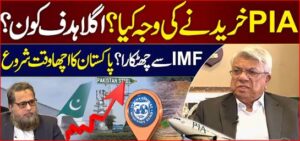
In addition, service quality and brand revival would be central to his planning. PIA was once known as one of Asia’s leading airlines, but poor service and inconsistent operations damaged its reputation. Mr. Habib would likely aim to rebuild the brand by improving punctuality, inflight services, staff training, and customer care. A renewed focus on hospitality, digital booking platforms, and loyalty programs could help attract both domestic and international passengers. Strong branding would not only increase revenue but also restore national pride in the airline.
Another important element of his strategy would be human resource reforms. PIA has long suffered from overstaffing and low productivity. Mr. Habib would probably introduce voluntary separation schemes, performance-based incentives, and modern HR practices. While such reforms may initially face resistance, they would be essential for long-term efficiency. At the same time, skilled and motivated employees would be rewarded, creating a culture of professionalism rather than entitlement.
Mr. Habib’s planning might also include strategic partnerships and privatization models. He could seek alliances with international airlines for code-sharing, training, and technical support. These partnerships would help PIA expand its network without heavy capital investment. Moreover, partial listing on the stock exchange could be considered to raise funds, improve transparency, and involve public shareholders in the airline’s future growth.
Finally, sustainability and national interest would likely guide his vision. Rather than treating PIA purely as a profit-making entity, Mr. Habib might balance commercial objectives with PIA’s role as a national carrier. Supporting tourism, facilitating overseas Pakistanis, and promoting Pakistan’s global image would remain part of the airline’s mission. However, these goals would be pursued through efficient planning rather than political pressure.
In conclusion, if Mr. Arif Habib owned PIA, his planning would likely focus on financial recovery, professional management, fleet modernization, service improvement, and long-term sustainability. By applying private-sector efficiency and strategic thinking, he could potentially transform PIA into a competitive airline once again. While the challenges would be significant, his track record suggests that with the right reforms and discipline, PIA’s revival would be possible under such leadership…..