






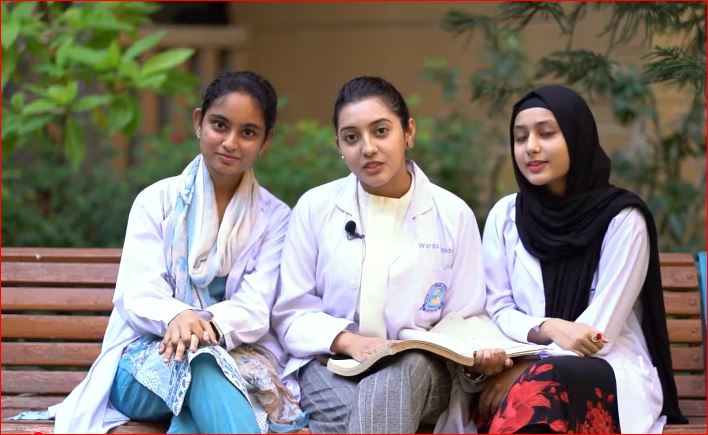
Dow University of Health Sciences (DUHS) is one of Pakistan’s foremost public medical and health sciences
The Dow University of Health Sciences (DUHS) is one of Pakistan’s foremost public medical and health sciences universities, renowned for its high standards in education, research, and clinical care. While the institution’s roots go back to the mid‑20th century, its Ojha Campus has emerged as a pivotal centre for academic training, specialized clinical services, and community health outreach in Karachi and beyond.
Origins and Development of Dow University
The foundation of DUHS originated in 1945 with Dow Medical College (DMC) — a pioneering medical school founded under the British Raj and named after Sir Hugh Dow, Governor of Sindh. Initially established to train physicians in what was then British India, the institution expanded rapidly after Pakistan’s independence to become a major medical education centre.
In 2004, the Dow University of Health Sciences was formally created through an act of the Sindh Legislature, integrating Dow Medical College and several other academic and clinical entities under one comprehensive university system. Since then, DUHS has broadened its academic portfolio to include medicine, dentistry, nursing, pharmacy, allied health sciences, biotechnology, public health, and business management programs related to healthcare.
Today, DUHS is globally recognized for the quality of its programs and its contributions to healthcare research and services, with several of its subjects ranked internationally.
The Significance of the Ojha Campus
The Ojha Campus — named after the philanthropist Ojha family who historically supported tuberculosis care in the region — stands as one of DUHS’s most important campuses in Karachi. It functions as a major academic and clinical hub, especially for postgraduate training, allied health sciences, and specialized care institutes.
Located on Suparco Road in Scheme‑33, Gulzar‑e‑Hijri, Karachi, the Ojha Campus houses numerous academic institutes, research facilities, clinical centers, and service units. It serves not only as a teaching site but also as a community health resource….
Academic and Professional Training
The Ojha Campus supports a wide array of academic programs and institutes within DUHS, broadening opportunities for students and professionals alike.
One of the notable bodies at Ojha Campus is the Institute of Business & Health Management (IBHM), which offers undergraduate and graduate programs including BBA, BS in Healthcare Management & Leadership, and MBA options. These programs are designed to blend healthcare knowledge with business skills, addressing critical leadership needs in the health sector.
Another significant academic division located at the campus is the Dow Institute of Physical Medicine & Rehabilitation (DIPM&R). CIPM&R provides an accredited Doctor of Physical Therapy program, complete with well‑equipped labs and learning facilities, to prepare graduates for careers in rehabilitation and allied health services.
Additionally, the Dow Institute of Nursing and Midwifery contributes significantly to training nurses and midwives who play an essential role in holistic patient care across Pakistan.
Complementing these academic programs are many other departments — such as diagnostic imaging, medical technology, dental sciences, and research units — which collectively generate a multidisciplinary educational environment for students from across the country and abroad.
Clinical Services and Community Healthcare
Beyond academics, the Ojha Campus is home to specialized clinical centers that provide free or subsidized healthcare, particularly to underserved populations:
Ojha Institute of Chest Diseases
The Ojha Institute of Chest Diseases (OICD) is a major hospital specializing in respiratory and infectious diseases. It has a 270‑bed capacity and runs multiple affiliated chest clinics. Services range from advanced diagnostics to the management of complex pulmonary illnesses, including drug–resistant tuberculosis (MDR‑TB). The institute also provides free treatment for both outpatient and inpatient care, reflecting its mission to serve the public.
In recent years, OICD has expanded its offerings to include Pakistan’s **first state‑of‑the‑art Pulmonary Tuberculosis ICU and, in October 2025, a free Pulmonary Rehabilitation Center. This new facility focuses on helping patients regain lung function and return to normal life after illness — a significant step in respiratory care in South Asia.
Dow University Hospital
While technically part of the university’s wider network, the Dow University Hospital adjacent to Ojha Campus offers comprehensive medical services across multiple specialties — including critical care, oncology, cardiology, surgery, and pediatrics. As a major teaching hospital, it provides an essential clinical training environment for medical and allied health students.
Additional Clinics and Specialized Services
In addition to chest and hospital services, DUHS at Ojha has continued to innovate with new clinics tailored to specific health challenges. For example, the university inaugurated a diabetic foot clinic in late 2025, aimed at preventing amputations and other complications among diabetic patients — a critical public health service in a country with one of the highest diabetes burdens in the world.
Student Life and Campus Facilities
The Ojha Campus supports a vibrant student body from across Pakistan and beyond. It offers gender‑segregated hostels, providing accommodation with basic amenities like study rooms, dining halls, prayer spaces, Wi‑Fi, and security services.
Students also benefit from academic support services, libraries, digital learning resources, and recreational spaces that contribute to holistic development. The campus fosters professional societies, clinical clubs, and community engagement activities that prepare students for leadership roles in healthcare and research.
Community Outreach and Social Impact
Beyond formal education and clinical care, DUHS at Ojha Campus plays a pivotal role in community outreach and public health awareness. Through programs like the Dow Skill Development Centre (DSDC), it provides vocational training and skills development for marginalized groups — empowering them with sustainable livelihood opportunities in healthcare and related trades.
These initiatives demonstrate the university’s commitment to inclusive development — bridging education with social service, supporting the United Nations Sustainable Development Goals (SDGs) such as quality education, decent work, and reduced inequalities……

Research and Innovation
Research at Ojha Campus feeds directly into global efforts to understand and combat disease, improve patient care, and innovate healthcare solutions. Active research projects encompass respiratory diseases, infectious disease control, rehabilitation science, and public health. Faculty and students collaborate on studies that aim to impact both national health policies and international scientific knowledge.
Challenges and Future Prospects
Like many large academic and clinical institutions, Ojha Campus faces challenges — from maintaining infrastructure and expanding capacity to integrating new technologies and meeting rising demand for healthcare services. Notwithstanding these hurdles, ongoing investments in facilities, programs, and research capacity reflect DUHS’s strategic vision of long‑term impact.
Future growth initiatives may further enhance specialized care, expand postgraduate training programs, and deepen collaborative research with national and global partners. By aligning academic excellence with community needs, Ojha Campus is positioned to remain a leader in health sciences education and service in Pakistan.
Conclusion
The Dow University of Health Sciences — Ojha Campus stands as a testament to Pakistan’s progress in academic medicine and healthcare delivery. With its blend of elite education, comprehensive clinical services, community engagement, and research innovation, it has expanded far beyond its historical roots to become a cornerstone of public health and learning. Whether through training future healthcare professionals, providing free or affordable medical care, or supporting socioeconomic development, the campus continues to enrich lives and shape the future of healthcare in the region and beyond…..