



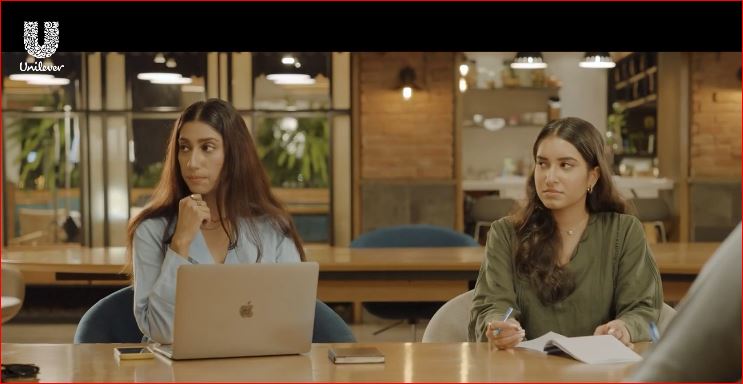
#TheUnspokenCost addresses the unequal distribution of unpaid domestic work—cleaning, caregiving, managing households, and emotional labor—that disproportionately falls on women. In Pakistan, these responsibilities are often viewed as natural extensions of womanhood rather than labor that consumes time, energy, and opportunity.
**#TheUnspokenCost | Unilever Pakistan**
In a country where conversations around gender roles, domestic labor, and emotional labor often remain muted, Unilever Pakistan’s campaign **#TheUnspokenCost** stands out as a powerful attempt to name what society frequently ignores. The campaign does not merely sell a product or polish a corporate image; it holds up a mirror to everyday realities that many households accept as “normal.” By spotlighting the invisible burden placed on women, #TheUnspokenCost challenges cultural norms and invites a long-overdue national conversation.
At its core, #TheUnspokenCost addresses the unequal distribution of unpaid domestic work—cleaning, caregiving, managing households, and emotional labor—that disproportionately falls on women. In Pakistan, these responsibilities are often viewed as natural extensions of womanhood rather than labor that consumes time, energy, and opportunity. Girls grow up watching their mothers juggle multiple roles without recognition, while boys are rarely socialized to see domestic contribution as their responsibility. The cost of this imbalance is not immediately visible, but it is deeply felt.
Unilever Pakistan frames this issue not as an abstract social theory but as a lived experience. The campaign highlights how the burden of household responsibilities limits women’s ability to pursue education, careers, rest, and personal growth. When a woman spends hours each day on unpaid labor, the opportunity cost is immense—missed promotions, abandoned ambitions, and chronic physical and mental exhaustion. These losses rarely appear in economic data, yet they shape the lives of millions.

What makes #TheUnspokenCost particularly impactful is its emotional storytelling. Rather than lecturing audiences, the campaign uses relatable narratives that resonate across socioeconomic classes. Viewers see reflections of their own homes: mothers who wake before everyone else and sleep last, daughters expected to “help out” while sons are excused, and women whose contributions are only noticed when they stop. This familiarity makes the message uncomfortable—but also powerful.
From a brand perspective, Unilever Pakistan’s approach aligns with its broader commitment to purpose-driven marketing. In recent years, consumers have become increasingly skeptical of brands that adopt social causes superficially. #TheUnspokenCost avoids this pitfall by rooting its message in authentic insight and sustained dialogue. Instead of positioning the brand as a savior, the campaign positions it as a catalyst—encouraging reflection, conversation, and behavioral change within households.
Critically, the campaign also speaks to men. Rather than portraying them as villains, it invites them to recognize their privilege and participate in solutions. This is a strategic and culturally sensitive choice. In a patriarchal society, change is unlikely to occur if men feel attacked or excluded. By emphasizing shared responsibility and mutual respect, #TheUnspokenCost reframes domestic work as a collective duty rather than a gendered obligation.
The social relevance of the campaign extends beyond individual homes. On a national level, the unequal burden of unpaid labor has direct implications for economic development. When women are prevented from fully participating in the workforce, the country loses talent, productivity, and innovation. By drawing attention to this reality, Unilever Pakistan subtly connects private household dynamics to public economic outcomes, reinforcing the idea that gender equality is not just a moral issue but a practical one.
However, #TheUnspokenCost also raises important questions about the role of corporations in social advocacy. Can a brand truly drive structural change, or does its influence end at awareness? Critics may argue that while such campaigns spark conversation, they risk oversimplifying deeply entrenched cultural issues. Awareness alone does not redistribute labor or dismantle patriarchy. Yet, it would be equally shortsighted to dismiss the value of awareness in a society where silence has long been the norm…..

In this sense, the campaign’s greatest achievement may be its ability to legitimize the conversation. By giving language and visibility to women’s unpaid labor, #TheUnspokenCost empowers individuals—especially women—to articulate their experiences without guilt or apology. It encourages families to question inherited norms and to imagine more equitable arrangements, even if change happens gradually.
Ultimately, #TheUnspokenCost is a reminder that progress often begins with recognition. Before costs can be shared, reduced, or compensated, they must first be acknowledged. Unilever Pakistan’s campaign does not claim to solve gender inequality, but it successfully exposes one of its most persistent and overlooked dimensions. In doing so, it transforms the unspoken into a national dialogue—and that, in itself, is a meaningful step forward……