









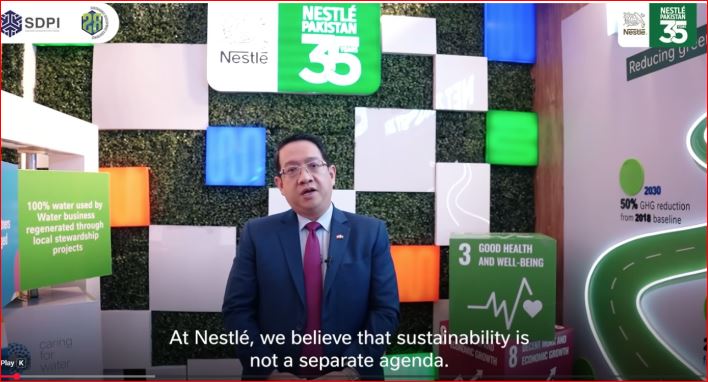
Nestlé Pakistan’s Sustainability Journey at 28ᵗʰ Sustainable Development Conference
Nestlé Pakistan and Its Contribution to the Sustainable Development Goals (SDGs)
Sustainable development has become a global priority as nations and organizations strive to balance economic growth with social inclusion and environmental protection. The United Nations’ Sustainable Development Goals (SDGs), adopted in 2015, provide a universal framework of 17 goals aimed at ending poverty, protecting the planet, and ensuring prosperity for all by 2030. As one of Pakistan’s leading multinational companies in the food and beverage sector, Nestlé Pakistan plays a significant role in supporting these goals through its business operations, community initiatives, and sustainability strategies.
Nestlé Pakistan aligns its sustainability efforts with Nestlé’s global Creating Shared Value (CSV) approach, which focuses on creating long-term value for shareholders while simultaneously benefiting society. This approach directly supports several SDGs, particularly those related to nutrition, water stewardship, decent work, climate action, and responsible consumption and production.
One of the most prominent areas where Nestlé Pakistan contributes is SDG 2: Zero Hunger and SDG 3: Good Health and Well-being. As a major producer of dairy products, infant nutrition, bottled water, and packaged foods, Nestlé Pakistan emphasizes improving nutritional standards across different age groups. The company fortifies its products with essential vitamins and minerals to help address micronutrient deficiencies prevalent in Pakistan, such as iron and vitamin D deficiency. Through nutrition awareness programs, Nestlé Pakistan also educates communities about balanced diets, maternal nutrition, and child health, thereby supporting healthier lifestyles.
Water stewardship is another critical focus area aligned with SDG 6: Clean Water and Sanitation. Pakistan is among the most water-stressed countries in the world, making responsible water management essential. Nestlé Pakistan has implemented water efficiency initiatives in its factories, reducing water usage per ton of product over the years. The company also invests in water conservation and replenishment projects, such as restoring wetlands, improving irrigation practices, and supporting access to clean drinking water in rural communities. These initiatives help protect local water resources while supporting community resilience.
Nestlé Pakistan also contributes to SDG 8: Decent Work and Economic Growth by generating employment opportunities and supporting inclusive economic development. The company employs thousands of people directly and indirectly through its supply chain. Nestlé Pakistan places strong emphasis on employee health and safety, skill development, and diversity and inclusion. Moreover, it supports local farmers through its dairy development programs, providing training, veterinary support, and fair pricing mechanisms. By strengthening the livelihoods of small-scale dairy farmers, Nestlé Pakistan helps promote sustainable income generation and rural development.
In line with SDG 12: Responsible Consumption and Production, Nestlé Pakistan has taken steps to reduce its environmental footprint. The company is working toward making its packaging recyclable or reusable and has introduced lightweight packaging to reduce material usage. Waste reduction initiatives, including zero waste to landfill goals at manufacturing sites, demonstrate Nestlé Pakistan’s commitment to more sustainable production practices. These efforts encourage responsible resource use and contribute to a circular economy.
Climate change mitigation is addressed through initiatives supporting SDG 13: Climate Action. Nestlé Pakistan is gradually reducing greenhouse gas emissions by improving energy efficiency, increasing the use of renewable energy, and optimizing transportation and logistics. In agriculture, the company promotes climate-smart farming practices to reduce emissions and improve resilience to climate-related risks. Such measures help lower environmental impact while ensuring long-term supply chain sustainability.
Nestlé Pakistan also supports SDG 17: Partnerships for the Goals by collaborating with government bodies, non-governmental organizations, academic institutions, and international development agencies. These partnerships enable the company to scale its impact, share best practices, and address complex social and environmental challenges more effectively. By working collectively with stakeholders, Nestlé Pakistan strengthens the overall ecosystem for sustainable development in the country.
In conclusion, Nestlé Pakistan demonstrates a strong commitment to the Sustainable Development Goals through its integrated approach to business and sustainability. By focusing on nutrition, water stewardship, economic empowerment, environmental responsibility, and partnerships, the company contributes meaningfully to Pakistan’s development agenda. While challenges such as climate change, resource scarcity, and social inequality persist, Nestlé Pakistan’s alignment with the SDGs highlights the important role the private sector can play in achieving a more sustainable and inclusive future for all…
https://www.youtube.com/@jeeveypak/shorts