






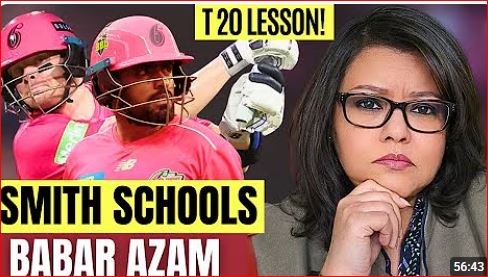
Indian News Channel Criticism of Babar Azam….And Reaction On Social Media ???
Babar Azam, the former captain of the Pakistan cricket team and one of the most technically gifted batters of the modern era, has often been a subject of intense discussion and criticism in Indian news channels. Given the historic rivalry between India and Pakistan, cricket coverage in the subcontinent is rarely limited to sports analysis alone. Instead, it frequently blends nationalism, emotional narratives, and media sensationalism. Indian news channels, in particular, have played a visible role in shaping public opinion about Babar Azam, especially during major ICC tournaments and high-profile India–Pakistan matches.
One of the most common criticisms made by Indian news channels revolves around Babar Azam’s performance in high-pressure matches, especially against India. While Babar has impressive overall statistics across formats, Indian media often highlight his comparatively modest performances in World Cups against the Indian team. Panel discussions frequently frame him as a player who “fails on big occasions,” contrasting him with Indian batters such as Virat Kohli or Rohit Sharma, who have delivered memorable innings in India–Pakistan encounters. This selective comparison sometimes ignores the broader context of team conditions, pitch behavior, and opposition quality.

Another recurring theme in Indian news debates is Babar Azam’s leadership. As Pakistan’s captain across formats for several years, Babar faced scrutiny for team selection, bowling changes, and on-field strategies. Indian channels often portray him as a “weak” or “defensive” captain, especially after Pakistan’s losses in tournaments. These critiques are frequently amplified after defeats, while his successes—such as Pakistan’s rise to the No. 1 ranking in Tests or victories against strong teams—receive comparatively limited attention. This uneven coverage reflects a tendency to focus more on failure than balance.
Indian news channels also frequently compare Babar Azam with Virat Kohli, framing the discussion as a rivalry. While comparisons between elite athletes are natural, the tone often becomes dismissive. Babar is sometimes described as “overrated” or “media-made,” with critics questioning whether he truly belongs in the same league as Kohli. Such narratives often overlook the fact that Babar’s consistency across formats and his elegant batting technique have earned praise from international cricketers, including former Indian players.
A significant factor influencing this criticism is the nature of Indian television news itself. Many sports debate shows thrive on high TRP-driven content, where aggressive language, dramatic headlines, and nationalistic sentiment attract viewers. In this environment, Pakistani players like Babar Azam become easy targets. Strong criticism of a rival nation’s star player often resonates with a segment of the audience, particularly during politically tense periods. As a result, objective cricket analysis sometimes takes a back seat to emotionally charged commentary.
Social media further amplifies these narratives. Clips from Indian news debates criticizing Babar Azam frequently circulate online, sometimes stripped of context. This creates a feedback loop where criticism from television panels fuels online trolling, which in turn reinforces negative perceptions. Babar’s calm demeanor and quiet personality also contrast with the aggressive media culture, making him an easier subject for harsh judgments compared to more outspoken athletes…


However, it is important to note that not all Indian media coverage is negative. Several former Indian cricketers and analysts have openly praised Babar Azam’s batting technique, timing, and composure. Players like Sunil Gavaskar and Virender Sehwag have acknowledged his class and potential. These voices, though present, are often overshadowed by louder, more confrontational debates on prime-time news shows.
In conclusion, Indian news channel criticism of Babar Azam is shaped by a mix of sporting rivalry, media sensationalism, and audience expectations. While some critiques—especially regarding leadership and big-match performances—are part of normal sports discourse, they are often exaggerated or selectively presented. Babar Azam remains one of the finest batters of his generation, and a more balanced, respectful analysis would better serve cricket fans on both sides of the border. Ultimately, cricket should be a platform for sporting excellence, not a tool for sustained media-driven negativity…..
=======