








“Imagine Going to Space and Returning to Find Your Country No Longer Exists — What Would You Do?”
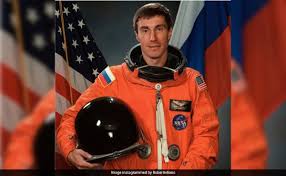
Sergei Krikalev never imagined that when he left Earth, the country he belonged to would disappear before he returned. In 1991, the experienced Soviet cosmonaut launched toward the Mir space station on what was supposed to be a routine mission. Instead, it became one of the most extraordinary stories in human history.
Krikalev had spent years training and had already flown in space before. By the time he arrived aboard Mir, the Soviet Union was facing deep political and economic turmoil. From orbit, he could not see borders or governments, but events on Earth were unfolding rapidly beneath him.
As weeks passed, messages from the ground became unclear and fragmented. Then the shocking reality emerged: the Soviet Union was collapsing. The nation that had sent him into space no longer existed. Funding was cut, missions were delayed, and there was no clear plan to bring him home on schedule.
Stranded in orbit, Krikalev continued circling the planet while the world below transformed. He later became known as “the last citizen of the Soviet Union,” because he had left Earth as a Soviet citizen and returned to a completely different country. Despite uncertainty, isolation, and fear, he kept working, maintaining the Mir space station and carrying out his duties with discipline and calm.
Months later, after long delays, a return mission was finally arranged by the newly formed Russian space agency. When Krikalev landed back on Earth, he was no longer just a cosmonaut completing a mission. He was a witness to the end of an era. He returned to a new nation, with a new flag, a new system, and a changed world.
Sergei Krikalev’s story is not only about space exploration, but about a man suspended between two histories, watching a civilization change from far above the Earth, powerless to do anything except wait to come home.