


The World Health Organization (WHO) is collaborating with the government to achieve Universal Health Coverage by strengthening health systems and services, particularly in areas like maternal and child health and immunization.
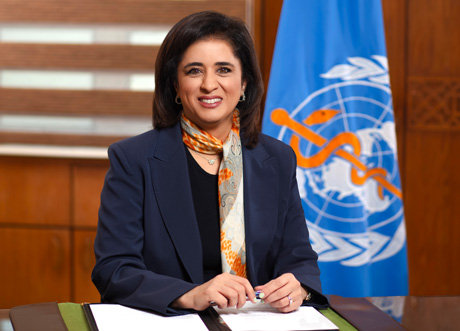
Dr Hanan Balkhy, WHO Regional Director
===================
The World Health Organization (WHO) is collaborating with the government of Sindh to achieve Universal Health Coverage by strengthening health systems and services, particularly in areas like maternal and child health and immunization. This includes supporting the implementation of programs that provide conditional cash transfers to pregnant women and mothers to ensure access to essential health services. The WHO is also engaged in disease prevention and control, surveillance, and providing technical support for policies and the overall healthcare infrastructure.
Key initiatives and collaborations
Maternal and Child Health (MCH): The WHO is supporting initiatives like the Sindh Social Protection Authority (SSPA), which provides conditional cash transfers to pregnant women and mothers of children under two. This program aims to increase the uptake of WHO-recommended services for maternal and child health, including antenatal care, safe deliveries, and postnatal check-ups.
Disease Prevention and Control: The organization provides technical support for disease surveillance and control campaigns. For example, it supported expanded surveillance of viral hepatitis which led to a prevention and control campaign in the province. It also supported an investigation into a pneumonia outbreak in 2012, which led to the enrollment of children into a community-based malnutrition program.
Health System Strengthening: WHO is working with the Sindh government to strengthen health systems and improve service delivery. This includes strengthening collaboration with partners and government agencies to achieve universal health coverage. The WHO also provides technical assistance and expertise to support the development of health policies and strategies.
Immunization: The WHO is working with the government of Sindh to strengthen the Expanded Program on Immunization (EPI). This includes providing technical support and guidance to ensure that every child receives essential vaccinations.
Technical Support: The organization provides technical support and expertise to the Sindh government in various areas, including health policy, disease surveillance, and quality assurance. This support helps the government improve the quality of healthcare services and ensure better health outcomes for the population
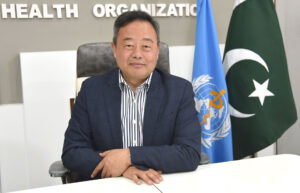
Dr Luo Dapeng: WHO Representative in Pakistan
==================
Dr Luo Dapeng, a Chinese national, was appointed WHO Representative in Pakistan on 1 February 2024. He was previously the WHO Representative in Afghanistan, where for 3 years he led one of the biggest WHO operations in the country. Dr Luo also served as WHO Representative in Papua New Guinea for about 4 years.
Dr Luo has been working in the field of international public health for more than 24 years. His rich experience spans communicable diseases and prevention and control of emerging diseases; country capacity-building for health security; and health system strengthening, particularly at the primary health care level. He has also led the management of complex emergencies and coordination of humanitarian health response.
Before becoming a country representative, Dr Luo spent 4 years as a team leader in Health Security and Communicable Diseases at the WHO Country Office in Lao People’s Democratic Republic. He also worked for 6 years as a medical officer in the Health Security and Communicable Diseases team of the WHO Country Office in Mongolia.
Other roles he has held with WHO include that of scientist, in the area of malaria and other vector-borne and parasitic diseases, in Papua New Guinea and epidemiologist at WHO headquarters. Before joining WHO, Dr Luo was an advisor with the Asian Development Bank in Indonesia.
Before starting his career in international public health, Dr Luo worked with China’s national malaria control programme, carrying out extensive field work. In this role, he led a field team for Plasmodium falciparum malaria elimination in the south of Henan province, China, for over 10 years.
Dr Luo obtained his medical degree from Henan Medical University, China, and trained in medical parasitology and entomology at the National Institute of Parasitic Diseases, Chinese Center for Disease Control and Prevention. He holds an MSc in Epidemiology and a PhD from the London School of Hygiene and Tropical Medicine, University of London, United Kingdom.