





Pakistan’s Polio Eradication Programme and the United Nations
The Pakistan Polio Eradication Programme stands as one of the most striking public health efforts in modern times. It is not merely a national immunization campaign, but a sustained, complex partnership between the government of Pakistan and an array of international entities—most notably United Nations organizations such as the World Health Organization (WHO) and the United Nations Children’s Fund (UNICEF). For over three decades, this programme has sought to completely eliminate poliovirus transmission in Pakistan.
Historical Context
Polio, a debilitating and sometimes fatal viral infection that primarily affects children under five, used to be rampant in Pakistan. In the early 1990s, the country reported about 20,000 cases annually—a shocking burden of disease by any standard.
In 1988, the Global Polio Eradication Initiative (GPEI) was launched—a monumental global campaign led by national governments alongside six core partners: WHO, UNICEF, Rotary International, the U.S. Centers for Disease Control and Prevention (CDC), the Bill & Melinda Gates Foundation, and Gavi, the Vaccine Alliance. Pakistan soon became a central battleground in this global fight.
Role of United Nations Organizations
World Health Organization (WHO)
As the primary United Nations health agency, WHO’s role in the Pakistan programme is foundational and multifaceted:
Technical and Operational Support
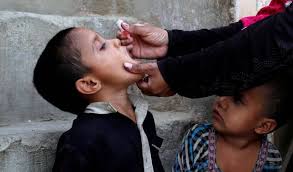
WHO works hand-in-hand with federal, provincial, and district health authorities to design and implement vaccination campaigns. It helps plan National and Sub-national Immunization Days, supports micro-planning, and advises on cold-chain management to ensure vaccines remain effective from factory to child.
Surveillance and Detection
One of WHO’s most critical contributions has been the development of one of the world’s largest poliovirus surveillance networks. This includes:
More than 12,500 Acute Flaccid Paralysis (AFP) reporting sites nationwide.
Environmental surveillance, with wastewater sampling from numerous sites to detect poliovirus circulation even before clinical cases appear.
These sensitive systems allow health officials to respond rapidly to new virus detections.
Training and Capacity Building
WHO, often in partnership with UNICEF and national authorities, organizes extensive training for vaccinators, supervisors, and data managers. These trainings ensure personnel are equipped not just with technical skills but also with community engagement strategies to address vaccine hesitancy.
Operational Support in High-Risk Areas
WHO’s presence is particularly strong in remote and conflict-affected regions, where it supports deployment of front-line workers and helps protect them in collaboration with local authorities. Deploying security protection and context-specific operational plans has been essential in reducing violence against vaccination teams.
UNICEF
UNICEF’s involvement, as the United Nations agency focused on children’s rights and survival, is equally indispensable:
Community Mobilization and Social Engagement
UNICEF works extensively with communities to raise awareness about polio vaccination, combat misinformation, and encourage caregivers to participate in campaigns. Thousands of community mobilizers—many of them women—play a crucial role in gaining trust at the grassroots level.
Transit Vaccination and Equity Initiatives
To reach every child—especially those who are highly mobile—UNICEF supports Permanent Transit Points (PTPs). These are strategically placed at borders, bus stops, and other transit hubs to ensure that children on the move are not missed.
Logistics and Vaccine Supplies
UNICEF also helps procure and distribute oral polio vaccines, maintain cold-chain supplies, and manage logistics in areas that are difficult to access. Its ability to coordinate large-scale vaccine distribution makes it a vital partner.
Government and National Coordination
The Government of Pakistan leads the initiative through the National Emergency Operations Centre (NEOC) and provincial counterparts. It synchronizes immunization activities, manages emergency response plans, and mobilizes local health workers. International partners like WHO and UNICEF provide the technical backbone, but the programme’s success depends on national ownership and leadership.
Progress and Achievements
Because of sustained efforts over three decades:
Polio cases in Pakistan have declined by more than 99% compared to the early 1990s.
Intensive vaccination rounds have reached tens of millions of children annually, with recent campaigns targeting over 45 million children in nationwide drives.
Sub-national campaigns have vaccinated millions more, significantly closing immunity gaps in high-risk districts.
Despite these achievements, Pakistan remains one of only two countries in the world where wild poliovirus type 1 is still endemic—the other being Afghanistan.
Challenges
Security and Violence
One of the most profound challenges has been the targeting of polio workers by militant groups. Since the 1990s, more than 200 health workers and their security escorts have been killed while conducting vaccination campaigns. This threat has made frontline work both heroic and perilous.
Vaccine Hesitancy and Misinformation
Misinformation remains widespread in some communities, where unfounded conspiracy theories about polio vaccines persist. Overcoming these beliefs requires ongoing community engagement and culturally sensitive advocacy—efforts that UNICEF and WHO have intensified.
Operational Gaps and Funding Uncertainty
Polio eradication demands enormous human, logistical, and financial resources. International funding fluctuations, including potential reductions in WHO support, pose risks to the momentum of eradication efforts. Sustained commitments from governments, philanthropies, and donor states are critical.
Recent Years and the “Last Mile” Vision
Experts and programme leaders frequently emphasize that Pakistan is now in the “last mile” of polio eradication—the stage where continuous efforts must be sustained even as cases become rare. Recent conferences and expert panels have reaffirmed that the cost of inaction is far higher than the costs of finishing the job.
Human Stories and Local Impact
Behind the numbers are countless individuals—vaccinators, surveillance officers, social mobilizers, and caregivers—whose stories reflect courage and commitment. Women in particular have become heroes in many communities, defying social barriers to ensure every child is protected….