










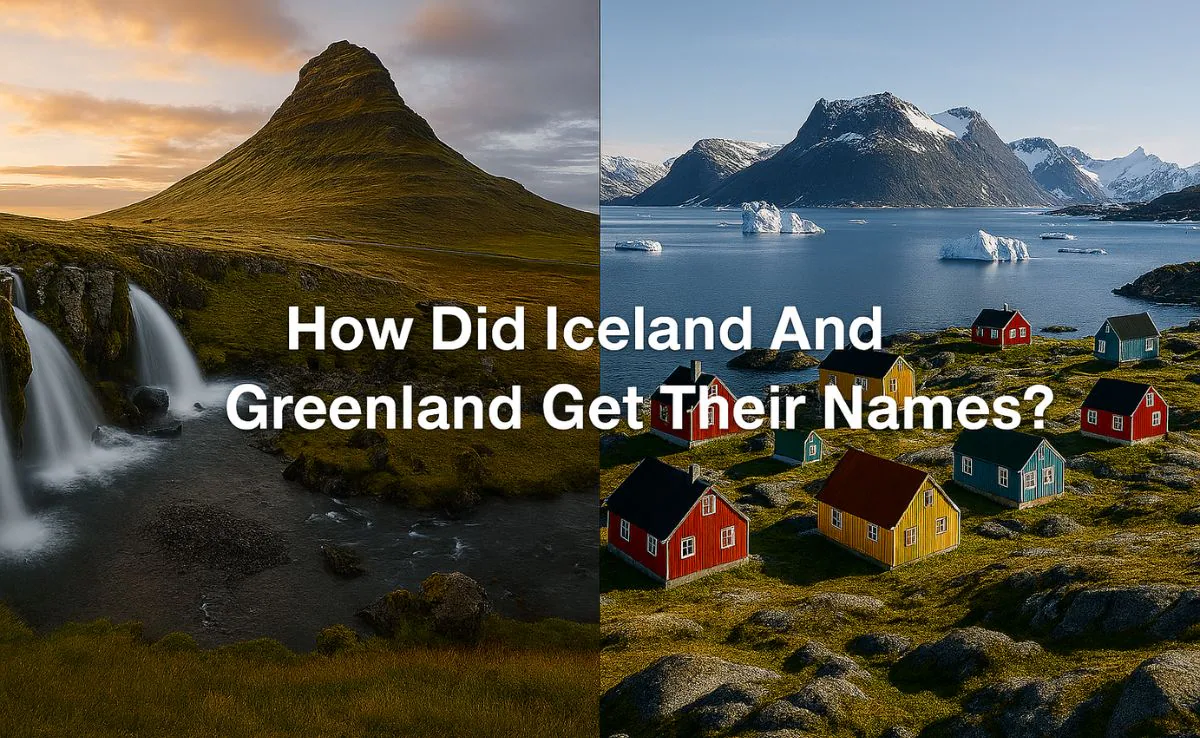
Why Iceland and Greenland Got Their Names Despite Not Matching Their Actual Landscapes
Iceland and Greenland got their seemingly backward names from Vikings: Greenland was named by Erik the Red to attract settlers during a warmer period when its coasts were green, while Iceland was named by explorers who saw icebergs and glaciers, focusing on its icy features despite fertile areas existing, with names reflecting strategic marketing or immediate observation rather than their overall modern landscape.
Greenland’s Name (Greenland):
Erik the Red’s Strategy: Erik the Red, banished from Iceland, discovered Greenland around 982 AD. He found the southern coasts green during a relatively warm spell and named it “Greenland” (Grœnland) to lure settlers, making it sound appealing and habitable.
“Land of the People”: The native Inuit call it Kalaallit Nunaat, meaning “Land of the People,” a name that reflects their reality more accurately.
Iceland’s Name (Iceland):
“Snowland” (Snæland): The first Norse visitor, Naddodd, named it Snæland (“Snowland”) after seeing icebergs.
“Ice-Land” (Ísland): Later, Viking Flóki Vilgerðarson (Hrafna-Flóki) saw ice in a fjord and solidified the name “Iceland,” despite reports of fertile land and lush summers.
Gulf Stream Influence: Iceland’s milder coastal climate and green summers are due to the warm Gulf Stream, but its name focused on the glaciers and ice found by these early explorers.