






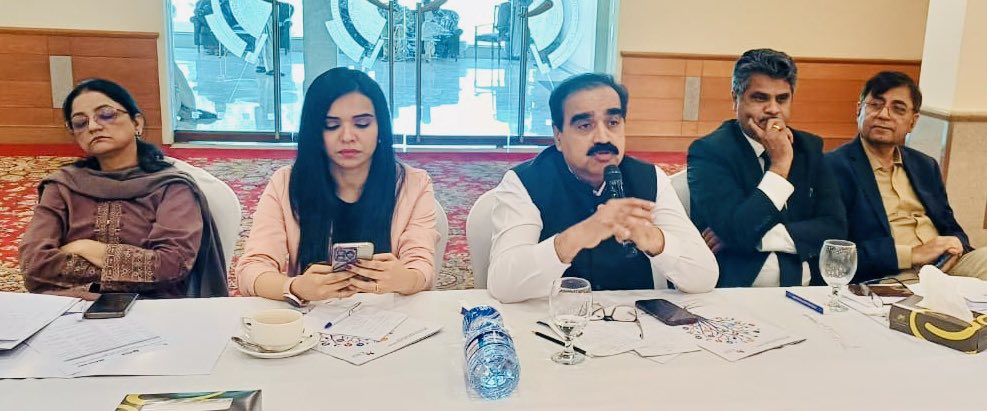
The Government of Sindh has taken several important steps to strengthen climate resilience, disaster preparedness, and gender-inclusive protection mechanisms
Director, Human Rights Department, Government of Sindh
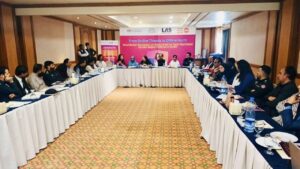
Provincial Consultation on Gender-Inclusive Climate Resilience, Protection & Institutional Coordination
12 December 2025 – PC Hotel, Karachi
⸻
Bismillah-ir-Rahman-ir-Raheem,
Distinguished guests, respected colleagues, members of civil society, development partners, representatives from line departments, and all participants — Assalam-o-Alaikum.
It is a pleasure to join you today for this important provincial consultation on Gender-Inclusive Climate Resilience, Protection, and Institutional Coordination. I extend my appreciation to the Civil Society Support Program (CSSP) for bringing us together on a matter that is not only timely but essential for the protection and dignity of our citizens.
⸻
Ladies and gentlemen,
Sindh is among the provinces most affected by climate-induced disasters. Floods, heatwaves, droughts, and displacement continue to reshape our social and economic landscape. Yet what concerns us most is how these climate risks disproportionately impact women, children, persons with disabilities, elderly persons, and marginalized communities.
During the 2022 floods alone, we witnessed:
• A rise in protection risks, including gender-based violence;
• Disruptions in health and essential services;
• Increased rates of forced early marriage;
• Safe spaces for women and girls becoming inaccessible;
• And significant gaps in coordination between humanitarian, protection, and government systems.
These realities demand that our climate response must be human rights–based, gender-sensitive, and protection-centered.
⸻
Government of Sindh’s Initiatives
The Government of Sindh has taken several important steps to strengthen climate resilience, disaster preparedness, and gender-inclusive protection mechanisms. Some of these efforts include:
1. Sindh Climate Change Policy & Action Plan
The Government has adopted a provincial climate policy focusing on adaptation, disaster preparedness, and resilience-building, with gender inclusion identified as a cross-cutting priority.
2. Establishment of the Women and Children Friendly Spaces
During disasters, the government—through Social Welfare, PDMA, and partner organizations—has supported the creation of safe spaces to provide psychosocial support, referrals, and protection services.
3. Sindh Child Protection Authority & Gender Protection Unit
These mechanisms have been strengthened to address child protection risks, GBV, and emergency vulnerabilities during climate events.
4. Community-Based Disaster Risk Management (CBDRM)
PDMA Sindh has operationalized district-level preparedness efforts, early warning dissemination, community engagement, and training for local responders.
5. Reforms in Police Response to GBV
Sindh Police have expanded women complaint units, introduced gender desks, and improved FIR registration processes for GBV cases — including those arising during crises.
6. Health Sector Response
The Department of Health has worked to strengthen emergency maternal health services, mobile health units, and reproductive health support during disasters.
7. Social Protection Programs
Initiatives such as Benazir Income Support Programme (federal) and provincial social welfare measures have supported climate-affected families, especially female-headed households.
These initiatives reflect the provincial government’s resolve to build a resilient, inclusive, and protection-focused climate response system.
⸻
Role of the Human Rights Department
As the Human Rights Department, it is our responsibility to ensure that no climate resilience policy overlooks the rights, dignity, and safety of the most vulnerable.
Our priorities include:
1. Institutionalizing protection mechanisms in climate and disaster policies.
2. Strengthening GBV response pathways in emergencies.
3. Supporting inclusive planning where women, minorities, and indigenous communities meaningfully participate.
4. Enhancing coordination among departments — especially Social Welfare, PDMA, Health, Education, Local Government, and Police.
5. Scaling up community-level awareness so people know their rights before, during, and after emergencies.
⸻
The Path Forward
Today’s consultation is not just an event.
It is a collective call to action.
We must ensure that:
• Climate resilience strategies include gender-responsive budgeting;
• District-level protection committees are strengthened and functional;
• Safe shelters, complaint mechanisms, legal aid, and psychosocial support remain accessible;
• And first responders receive training on human rights and gender-sensitive approaches.
⸻
Collaboration & Commitment
No single department can address these issues alone.
Climate change and protection challenges demand a whole-of-government and whole-of-society response.
I appreciate CSSP and all partners for their continued efforts in highlighting the intersections between climate risks and human rights vulnerabilities.
Let this consultation be a turning point —
Where we move from discussion to joint action,
From coordination to implementation,
And from policy frameworks to field-level protection measures.
⸻
Closing
On behalf of the Human Rights Department, I assure you of our continued support in strengthening gender-inclusive and rights-based climate resilience in Sindh. Together, we can build systems that protect, empower, and uphold the dignity of every citizen — especially those at greatest risk.
Thank you.
Pakistan Zindabad.