



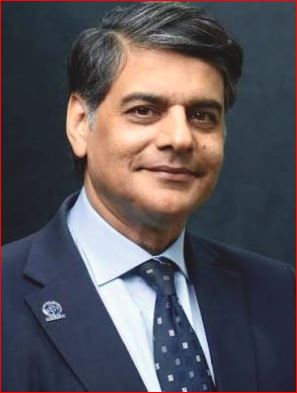


The Human Rights Commission of Pakistan (HRCP) Chairperson, Asad Iqbal Butt, has urged the country’s rulers not to repeat the mistakes that led to the tragedy of 1971, emphasizing that Pakistan’s survival depends on restoring democratic governance and ensuring employment, education, and healthcare for all citizens.
Press Release
KARACHI: The Human Rights Commission of Pakistan (HRCP) Chairperson, Asad Iqbal Butt, has urged the country’s rulers not to repeat the mistakes that led to the tragedy of 1971, emphasizing that Pakistan’s survival depends on restoring democratic governance and ensuring employment, education, and healthcare for all citizens.
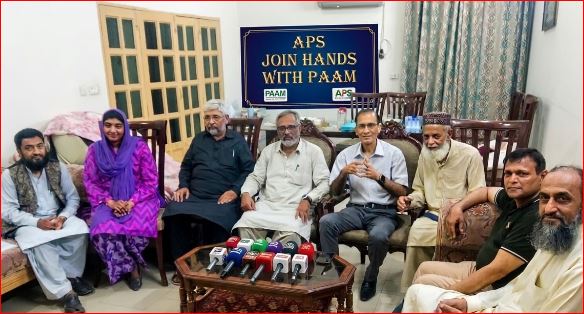
He was addressing a seminar held at the Karachi Press Club on Wednesday to mark International Human Rights Day.
Butt said Pakistan’s ruling elite bears direct responsibility for the widespread human rights violations across the country. Backed by powerful capitalist interests, he noted, they have transformed political authority into an organized system of exploitation, rendering democratic institutions ineffective and nearly paralyzed.
He warned that the state’s longstanding practice of using religious groups for strategic objectives has fueled terrorism and must end immediately. Constitutional distortions, attacks on the rule of law, and amendments enabling authoritarianism, he said, have pushed Pakistan towards a quasi-fascist order where dissent is criminalized and questioning the state is treated as rebellion.
“Despite repression, public movements, political parties, social organizations, and oppressed nationalities are standing firm,” he said. “Efforts are underway to unite resistance forces into a broad popular alliance against fascism, imperialist domination, and class-based exploitation.”
The joint platform has put forward several key demands, including: withdrawal of the 26th and 27th constitutional amendments; an end to enforced disappearances; release of political prisoners; restoration of media freedoms; a minimum wage of Rs 50,000; abolition of anti-worker laws; protection of trade unions; halt to land grabbing and corporate farming; restoration of student unions; and equitable access to education.
Speaking on enforced disappearances, Professor Sohail Sangi said that the practice dates back to the abduction of Hassan Nasir and has intensified over the years. “They do not tolerate questions. They do not want any counter-narrative,” he said, adding that although reported numbers appear lower since 2024, the state has merely changed its strategy by widening fear and intimidation.
He expressed hope that ongoing resistance movements would continue until meaningful change is achieved.
Discussing fundamental freedoms, Dr Riaz Sheikh said that human rights violations are a global phenomenon but economic independence is essential to counter them. “Job insecurity, unchecked privatization, and the denial of wages even to media workers are all violations of human rights,” he said. Political space, freedom of thought, and freedom of association, he warned, are shrinking globally. “Religious radicalization remains a burning issue and must be addressed as part of the global human rights agenda.”
Addressing gender-based violence, Shazia Nizamani said GBV has become a global pandemic. “Last year alone, 50,000 women were murdered in various crimes worldwide, while 80,000 were killed in domestic violence incidents. In Pakistan, 21,000 women and children have faced domestic violence in the past six years,” she said. She stressed that despite constitutional guarantees, grave violations persist, underscoring the need to change societal mindsets.
Dr Tauseef Ahmed Khan called for the freedom of Junaid Hafeez, who remains incarcerated under blasphemy allegations. He said meaningful religious freedom is impossible without revising the curriculum. Citing data, he said over 100 Ahmadis have been murdered, including one lynched in Karachi’s Saddar area, adding that mob attacks on worship places are often followed by government sealing those same places. He noted that Christian and Hindu communities face similar persecution, including forced conversions and attacks on worship sites.
“We must raise awareness and urgently reform the curriculum,” he emphasized.
Advocate Aysha Dharijo said that despite the 27th constitutional amendment, people remain deprived of fundamental rights. “Forced conversion laws exist but are not implemented. Hundreds of Hindu girls continue to be forcibly converted,” she said. She criticized the state for focusing on non-issues while ignoring major concerns such as corporate farming, water scarcity, and land grabbing.
Ends