
How Does the United Nations Work?
The United Nations (UN) is one of the most influential international organizations in the world, playing a central role in maintaining peace, promoting development, and fostering cooperation among nations. Since its founding in 1945, the UN has grown to include nearly every country on Earth—193 member states in total. But despite its visibility, many people still wonder: How exactly does the United Nations work? What are its major bodies, how are decisions made, and why does it matter so much in global affairs? This article explains how the UN functions, how it is structured, and how it tries to respond to the world’s most pressing challenges.
A Global Organization With Clear Goals
The UN was created after the devastation of World War II. Its primary aim was to prevent another global conflict and to build a platform where countries can discuss and resolve issues peacefully. Its goals are outlined in the UN Charter, the foundational document that defines its mission. These goals include:
Maintaining international peace and security
Promoting human rights and fundamental freedoms
Advancing social progress and better living standards
Fostering friendly relations among nations
Providing a forum for cooperation on global problems
These broad aims shape everything the United Nations does. But to accomplish them, the organization relies on a complex structure of specialized agencies, councils, and programs.
The Six Main Organs of the United Nations
Although the UN has dozens of agencies and bodies, its work is centered around six main organs, each with a different role.
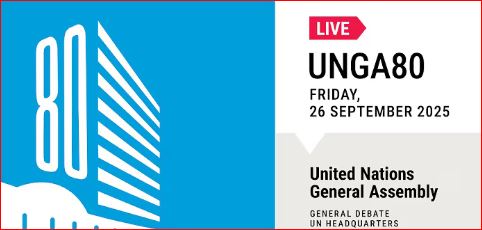
1. The General Assembly (UNGA)
Often called the “parliament of the world,” the General Assembly is the most inclusive body of the UN. All 193 member states are represented, and each has one vote, regardless of size or economic power.
The General Assembly’s major functions include:
Discussing issues of global importance
Approving the UN budget
Electing members to other UN bodies
Passing non-binding resolutions that express global opinion
While General Assembly decisions are not legally enforceable, they carry significant moral and political weight. They reflect the collective voice of the international community.
2. The Security Council (UNSC)
The Security Council is the most powerful body of the UN. Its main responsibility is maintaining international peace and security.
It has 15 members:
5 permanent members (P5): United States, United Kingdom, France, Russia, and China
10 non-permanent members elected for two-year terms
The P5 hold veto power, meaning any one of them can block a resolution, even if all other members agree. This veto power is often controversial, but it reflects the world power dynamics at the end of World War II.
The Security Council can:
Impose sanctions
Mandate peacekeeping missions
Authorize the use of force
Issue binding resolutions that all UN members must follow
These decisions make the Security Council central to international conflict response.
3. The Secretariat
The Secretariat is responsible for the day-to-day functioning of the UN. It is led by the Secretary-General, who acts as the organization’s top diplomat.
The Secretary-General:
Oversees thousands of UN staff
Brings attention to international crises
Mediates in conflicts
Coordinates humanitarian relief
The Secretariat ensures that decisions made by other UN bodies are implemented effectively.
4. The International Court of Justice (ICJ)
Located in The Hague, Netherlands, the ICJ is the judicial branch of the UN. It settles legal disputes between countries and gives advisory opinions on international legal questions.
Its rulings are binding, but the court depends on countries’ willingness to comply. Still, the ICJ plays a crucial role in promoting peaceful resolution of disputes.
5. The Economic and Social Council (ECOSOC)
ECOSOC coordinates global economic, social, and environmental efforts. It oversees many specialized agencies, including:
World Health Organization (WHO)
United Nations Educational, Scientific and Cultural Organization (UNESCO)
International Labour Organization (ILO)
International Monetary Fund (IMF)* (works with but is not controlled by the UN)
ECOSOC focuses on sustainable development, poverty reduction, and international cooperation.
6. The Trusteeship Council
Originally established to supervise territories under UN trusteeship, the Council suspended operations in 1994 when the last such territory achieved independence. Although inactive, it still formally exists and can be reactivated if needed.
How the UN Makes Decisions
UN decision-making depends on the body involved:
General Assembly
Resolutions require a simple majority, or a two-thirds majority for major issues like peace and security.
Decisions are non-binding but influential.
Security Council
Binding resolutions require 9 out of 15 votes.
No P5 member can veto the resolution.
The veto is one of the most debated features of the UN. Supporters argue it prevents great-power conflict, while critics say it often blocks urgent action in crises.
Peacekeeping: One of the UN’s Most Visible Roles
One of the best-known activities of the UN is peacekeeping. Blue-helmeted UN peacekeepers help stabilize conflict zones, monitor ceasefires, protect civilians, and support political transitions.
UN peacekeeping missions are typically authorized by the Security Council and staffed by troops contributed by member states. Importantly:
Peacekeepers do not wage war.
They operate with the consent of the host country.
They follow strict rules of engagement.
While peacekeeping has had successes in places such as Liberia, Sierra Leone, and Cambodia, it has also faced failures, such as in Rwanda and Srebrenica. These challenges have led to ongoing reforms.
UN Specialized Agencies and Programs
In addition to its major organs, the UN operates through a network of agencies and programs that handle specific issues.
Some key examples include:
World Health Organization (WHO)
Coordinates global health efforts, tracks disease outbreaks, and supports health systems.
UNICEF
Provides humanitarian assistance to children and mothers worldwide.
World Food Programme (WFP)
Delivers food aid during emergencies and works to reduce hunger.
UN Refugee Agency (UNHCR)
Protects refugees and displaced people.
UN Development Programme (UNDP)
Supports countries in poverty reduction, governance, and climate adaptation.
These agencies operate worldwide and often collaborate with NGOs, governments, and private sector partners.
How the UN Is Funded
The UN is funded through:
Assessed contributions — mandatory payments based on a country’s economic size.
Voluntary contributions — donations to specific programs or humanitarian causes.
The United States, China, Japan, and Germany are among the largest contributors. Developing countries tend to contribute less financially but may provide peacekeeping troops or other support.
Challenges the United Nations Faces
Despite its importance, the UN faces significant challenges:
1. Power imbalance and the veto system
The P5’s veto power often limits action during major crises.
2. Funding shortages
Many agencies struggle with unreliable funding.
3. Bureaucracy
The UN’s large structure can make decision-making slow.
4. Conflicts among member states
Geopolitical tensions, especially among major powers, affect cooperation.
5. Expectations vs. authority
The UN is expected to solve global problems, but it can only act with member states’ consent.
Why the United Nations Still Matters
Despite its limitations, the UN remains essential for several reasons:
It provides a unique forum where all countries can discuss global issues.
It sets international laws and norms that guide global behavior.
It responds to humanitarian crises and helps rebuild societies.
It advances development, human rights, and climate action.
It helps prevent conflicts and promotes diplomacy.
Without the UN, cooperation on global issues—such as pandemics, climate change, terrorism, and refugee protection—would be far more difficult.