


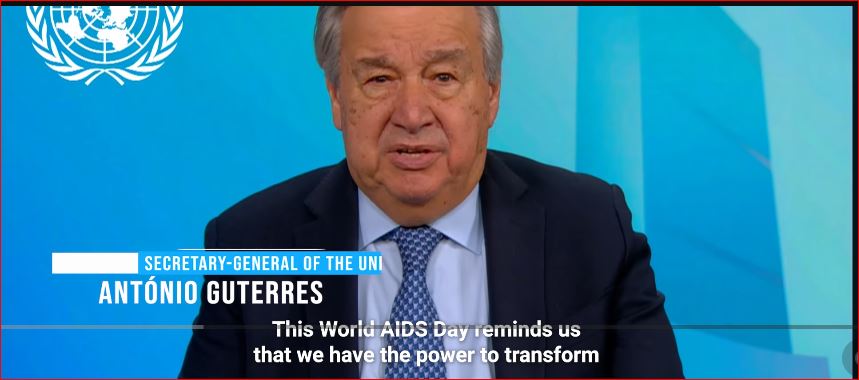
United Nations Message for World AIDS Day
Each year on World AIDS Day, the international community pauses to remember the millions of lives affected by HIV and AIDS, to honor those we have lost, to celebrate progress, and to renew our commitment to ending the epidemic. The United Nations—whose agencies have led decades of global action—uses this day not merely as a moment of reflection, but as a call to redouble efforts so that the promise of a world free from AIDS becomes a lived reality. The UN’s message is rooted in solidarity, science, human rights, and the conviction that ending AIDS is possible if the world chooses cooperation over complacency.
A Day of Remembrance and Resolve
The UN emphasizes that World AIDS Day is both a memorial and a pledge. It reminds us of the more than 40 million people who have died of AIDS-related illnesses since the beginning of the epidemic. Behind this staggering figure are families, friends, and communities forever changed. Yet the day also celebrates the resilience of people living with HIV, the courage of activists, and the dedication of health workers who have fought stigma and expanded access to treatment around the globe.
According to the UN’s messaging, remembrance must inspire action. The lives lost represent battles fought not only against a virus, but also against inequality, discrimination, and social injustice. These structural obstacles still shape the epidemic today. Thus, World AIDS Day is not simply about looking back—it is about confronting the present and shaping a future where no one is left behind.
The Promise of Science and the Importance of Access
One of the central themes of the UN’s World AIDS Day message is that progress is real—and irrefutable. HIV infection is now a manageable chronic condition for millions of people. Antiretroviral therapy (ART) allows those living with HIV to lead long, healthy lives and reduces the risk of transmission to near zero when viral loads are suppressed. Pre-exposure prophylaxis (PrEP) provides an effective preventive option for those at higher risk. Advances in diagnostics, medications, and prevention strategies are stronger than ever.
But scientific advances alone cannot end AIDS. Access to these breakthroughs remains deeply unequal across regions and communities. The UN stresses that millions of people—particularly in low-income countries, rural areas, and marginalized populations—still cannot obtain the treatment or prevention tools they need. Inequity continues to shape who receives care and who does not.
The UN warns that if the world fails to close these gaps, the promise of science will be reserved for the privileged few. World AIDS Day therefore becomes a moment to push global leaders, governments, and partners to invest in health systems, reduce costs, and ensure that medicines, testing, and prevention services reach everyone.
Ending Inequalities: The Heart of the UN’s Message
A persistent theme across UN agencies—especially UNAIDS—is clear: inequalities are driving the AIDS epidemic, and overcoming them is the key to ending it. This includes economic inequality, gender inequality, racial inequality, and inequality related to marginalization of certain groups.
Women and girls in many parts of the world face higher vulnerability due to gender-based violence, lack of access to education, and limited control over sexual and reproductive health. Men who have sex with men, transgender people, sex workers, people who inject drugs, and incarcerated individuals often confront stigma, criminalization, and discrimination that deter them from seeking care.
The UN argues that as long as these groups face legal and social barriers, the world cannot achieve an AIDS-free generation. Ending inequalities means reforming laws that criminalize people living with HIV and key populations. It means expanding the reach of community-led health initiatives. It means funding programs that center human dignity, not judgment or punishment.
On World AIDS Day, the UN asks governments to put human rights at the forefront of HIV response, because protecting rights saves lives.
Resilience and the Role of Communities
Another powerful element of the UN’s message is its recognition of the vital role that communities play. From the earliest days of the epidemic, community organizations—often led by people living with HIV—were the first to provide support, care, and advocacy. These community networks continue to be a lifeline for millions.
The UN acknowledges that community leadership is not a supplement to global health efforts—it is a cornerstone of success. Community-based organizations help deliver testing and treatment, fight stigma, educate populations, and support adherence to medication. They work in places where formal health systems struggle to reach, especially in remote or underserved areas.
On World AIDS Day, the UN calls for greater investment in community-led responses, emphasizing that these groups must be partners in planning, implementation, and oversight. Their firsthand understanding of local challenges makes them essential architects of a world free from AIDS.
Youth at the Center of the Global Response
With a significant percentage of new HIV infections occurring among young people, the UN highlights the importance of engaging youth. Today’s generation of young people is more informed, connected, and innovative than any before, yet many still lack access to comprehensive sexual education, youth-friendly health services, or the tools to protect themselves.
The UN urges countries to invest in education that is grounded in science and respect—not fear or stigma. It calls for empowering youth voices, integrating them into leadership roles, and providing resources tailored to young people’s needs. Ending AIDS by 2030 requires ensuring that the next generation has the knowledge, agency, and support to stay safe and healthy.
Global Solidarity in a Time of Multiple Crises
The UN’s message also acknowledges the broader global context in which the fight against AIDS continues. Economic instability, armed conflict, climate-related disasters, and global pandemics such as COVID-19 threaten to divert attention and resources away from HIV response. These crises strain health systems, disrupt supply chains, and create environments where vulnerable populations become even more exposed.
World AIDS Day becomes a call for steadfastness. The UN reminds governments and donors that the world cannot afford to lose momentum after decades of hard-won progress. Investing in HIV prevention and treatment strengthens broader health systems, supports maternal and child health, and enhances global readiness for future epidemics.
In essence, fighting AIDS is not only a moral imperative—it is a smart public health investment with far-reaching benefits.
Stigma: The Barrier We Can—and Must—Break
Despite scientific breakthroughs, stigma remains one of the most persistent challenges. The UN underscores that stigma kills—by discouraging testing, limiting access to treatment, and perpetuating discrimination. People living with HIV may still face rejection, violence, or fear of disclosure.
The UN’s World AIDS Day message calls stigma a violation of human rights and an obstacle to public health. It urges governments, institutions, and individuals to challenge myths, promote compassion, and ensure that people living with HIV are treated with dignity.
Ending stigma requires cultural change, legal measures, education, and the amplification of real stories from people living with HIV. The UN emphasizes that empathy is as important as medicine in the global response.
The 2030 Goal: A Promise We Must Keep
Central to the UN’s message is the global commitment to end AIDS as a public health threat by 2030. This goal is ambitious but achievable—if the world accelerates action now. Meeting the target requires:
Universal access to treatment
Expanded testing
Scaled-up prevention programs
Strong health systems
Investment in research
Human-rights-centered policies
Community leadership and sustainable financing
The UN stresses that failure is not an option. The tools exist, the knowledge exists, and the global framework exists. What is needed is unwavering political will and sustained funding. The cost of inaction—not only in lives lost but in economic and social consequences—would be far greater.
A Call to Every Nation, Every Community, Every Person
The United Nations’ message for World AIDS Day ultimately seeks to unite the world in shared responsibility. Ending AIDS is not only the job of governments or healthcare systems; it is the responsibility of every individual. Whether by supporting local organizations, advocating for rights, challenging stigma, or simply educating oneself and others, everyone has a role to play.
The UN emphasizes that compassion, solidarity, and justice are as essential to ending AIDS as scientific breakthroughs. When countries stand together, when communities support one another, and when individuals choose empathy over fear, progress accelerates.
Conclusion: A Future Within Reach
World AIDS Day is a moment of remembrance—but also of hope. The United Nations’ message is clear: the world has the knowledge, the tools, and the power to end AIDS in our lifetime. But this future will only be realized if humanity chooses courage, cooperation, and compassion over complacency.
On this day, as the UN reminds us, we honor the past, confront the present, and commit ourselves to a future where every person—regardless of gender, race, sexuality, economic status, or geography—has the right to health, dignity, and life. Ending AIDS is more than a health goal; it is a global promise rooted in equality and humanity.
And it is a promise we must keep.
\
=======