
UNICEF and its mission in Pakistan
UNICEF is the United Nations agency dedicated to protecting children’s rights, survival, development, and well-being. Since 1948, UNICEF has operated in Pakistan, working to ensure that girls and boys — regardless of their background — have access to basic services such as health care, nutrition, education, water and sanitation, protection, and opportunities to thrive.
UNICEF
+2
UNICEF
+2
Given that nearly 40% of Pakistan’s population is under 18, representing over 80 million children, the role of UNICEF is critical.
UNICEF
+1
The agency works closely with the Government of Pakistan, provincial and local authorities, civil society organizations, and other partners to promote children’s rights, reduce inequities, and respond to emergencies.
UNICEF
+2
UNDP
+2
Core Areas of Work
UNICEF’s work in Pakistan spans a wide range of sectors essential for children’s health, education, protection, and development. Key focus areas include:
Health, immunization, and child survival
One of UNICEF’s primary goals in Pakistan is to ensure that “every child survives and thrives.”
UNICEF
+1
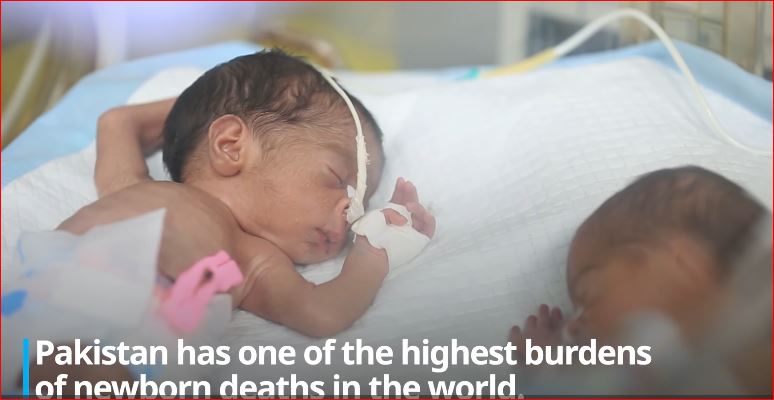
This involves expanding access to quality maternal, newborn, and child health services; increasing immunization coverage; preventing disease outbreaks; and reducing childhood mortality.
UNICEF
+2
UNICEF
+2
In particular, UNICEF remains a key player in the country’s battle against polio — Pakistan is one of only a few countries where polio remains endemic.
UNICEF
+1
The agency supports immunization campaigns, health-system strengthening, and emergency readiness.
UNICEF
+1
UNICEF’s 2024 report highlights that the agency helped provide neonatal and childhood illness management, expanded newborn-care facilities, and trained thousands of health workers across the country.
UNICEF
Nutrition
Malnutrition remains a grave concern in many parts of Pakistan, particularly in underserved or disaster-affected areas. UNICEF works to ensure that children receive proper nutrition — especially in early childhood — to support healthy growth and development.
UNICEF
+2
unicef.ca
+2
During humanitarian emergencies — such as floods or displacement — UNICEF is often at the forefront of delivering life-saving nutrition support.
unicef.ca
+2
unicefusa.org
+2
Water, Sanitation & Hygiene (WASH)
Access to clean water, proper sanitation, and hygiene services is fundamental to child health. UNICEF supports WASH programmes across Pakistan, aiming to reduce water-borne diseases, improve hygiene practices, and ensure communities — especially children — have safe water and sanitation.
UNICEF
+2
RSPN
+2
Historically, UNICEF worked to achieve sanitation goals under global development targets (e.g., the Millennium Development Goals), partnering with local organizations to implement frameworks like Pakistan Approach to Total Sanitation (PATS) to drive behavior change, build capacities, and promote community-led sanitation.
RSPN
+2
RSPN
+2
Education and Learning Opportunities
Education — both formal and non-formal — is another central pillar of UNICEF’s work in Pakistan. Many children and adolescents in Pakistan remain out of school, facing barriers due to poverty, geographic isolation, or social inequalities.
psdf.org.pk
+2
UNICEF
+2
To address this, UNICEF partners with local entities to support foundational learning, alternative education pathways, and skill-development opportunities. For instance, through cooperation with Punjab Skills Development Fund (PSDF), UNICEF helped design and implement a “Non-Formal Education to Job Placement” programme under the wider Generation Unlimited (GenU) platform. This initiative targets out-of-school adolescents (ages 10–19), offering them accelerated learning, market-relevant skills training, and links to income-generating opportunities.
psdf.org.pk
+1
Such efforts are especially important in a country with a large youth population and many adolescents at risk of being left behind by traditional formal education systems.
psdf.org.pk
+1
Child Protection and Social Safety
Beyond health, nutrition, and education, UNICEF works to protect children from violence, neglect, exploitation, and other risks.
UNICEF
+2
PakNGOs
+2
Recognizing emerging needs, UNICEF has recently strengthened child-protection mechanisms. For example, by early 2025, UNICEF announced the establishment of additional District Child Protection Units (DCPUs), designed to support vulnerable children with medical, psychological, and legal services.
SAMAA TV
These units are especially important in regions affected by disasters, displacement, or socio-economic stress — helping children who may otherwise be invisible to services or at risk of neglect or abuse.
SAMAA TV
+1
Emergency Response and Disaster Risk Reduction
Pakistan is prone to natural disasters, including floods, earthquakes, and climate-related events. In times of crisis, children are often among the most vulnerable. UNICEF’s work in disaster risk reduction, emergency response, and rebuilding humanitarian-support systems is therefore crucial.
UNICEF
+2
PakNGOs
+2
For example, following severe floods in 2022, UNICEF provided support for displaced families, helped restore damaged health, water, sanitation, and education facilities, and offered life-saving interventions to affected children and their communities.
unicef.ca
+2
aap.gos.pk
+2
UNICEF also works to build climate-resilient systems and support long-term recovery, aiming to reduce the impact of future disasters.
unicef.ca
+2
UNICEF
+2
Recent Achievements and Impact (2024 and beyond)
The most recent reporting by UNICEF in Pakistan indicates substantial results across multiple sectors. In 2024:
UNICEF
Millions of children and families benefited from integrated maternal, newborn, and child-health services. Specifically, neonatal and childhood illness management reached large numbers.
UNICEF
Immunization and disease-prevention efforts contributed to public-health resilience.
UNICEF
+1
UNICEF extended water services to hundreds of thousands of people — improving access to safe drinking water in areas where infrastructure had been damaged or was inadequate.
UNICEF
+1
Early-childhood care services expanded, including newborn-care units, “Kangaroo Mother Care” units, and home-based newborn-care programmes.
UNICEF
Birth registration services improved: hundreds of thousands of births in health facilities were registered, which helps ensure children have legal identity and access to services.
UNICEF
In nutrition, many children suffering from severe acute malnutrition were treated.
UNICEF
On the education front, children accessed both formal and alternative learning opportunities, including foundational education and non-formal learning for out-of-school adolescents.
UNICEF
+1
Youth engagement expanded: thousands of youths received vocational training, and many were involved in climate-advocacy efforts.
UNICEF
Moreover, UNICEF has supported energy resilience and sustainable infrastructure for health facilities — for example by installing solar energy in hospitals — to ensure continuous care even in power-shortage contexts.
UNICEF
+1
At the policy and planning level, UNICEF has also played a role: advocating for stronger primary health-care investments, supporting the establishment of a “Health Education Cell” within the Ministry of National Health Services, and helping develop roadmaps to address noncommunicable diseases and prevent lead poisoning among children.
UNICEF
Partnerships and Collaborative Approach
A defining feature of UNICEF’s work in Pakistan is its emphasis on partnerships. UNICEF does not act alone — it collaborates with national and provincial governments, local authorities, NGOs, civil-society organizations, community groups, international organizations and donor agencies.
UNICEF
+2
UNICEF
+2
Funding and support come from a variety of sources: foreign governments (e.g. United States, Canada, Japan, United Kingdom, European Union, Denmark, Sweden, Netherlands), UNICEF National Committees, private foundations and NGOs.
UNICEF
+1
One example of strategic partnership is the collaboration with PSDF under the Generation Unlimited initiative to help out-of-school youth gain skills and access employment opportunities.
psdf.org.pk
+1
Another important partnership mechanism is the UNICEF Pakistan Advisory Council (UPAC), launched to bring together thought-leaders, philanthropists, and advocates committed to advancing child rights, equity, good practices in health, education, protection, climate change, and social inclusion — helping to co-create sustainable, locally relevant solutions.
UNICEF
+1
Challenges and Needs: Why UNICEF’s Work Matters
Despite progress, many challenges remain. Pakistan grapples with deep inequalities — geographic, socioeconomic, and gender-based — that affect children’s access to health, education, nutrition, and protection.
UNICEF
+2
PakNGOs
+2
Frequent natural disasters (floods, climate-induced shocks), population displacement, poverty, and limited infrastructure often magnify children’s vulnerabilities — especially in remote or underserved areas.
unicef.ca
+2
unicefusa.org
+2
Large numbers of children remain out of school, or receive only minimal education; many young people lack marketable skills; malnutrition and disease remain high in certain communities; safe water, hygiene, sanitation — or their access — remains a struggle in many rural and urban areas.
PakNGOs
+2
psdf.org.pk
+2
Moreover, emergencies and climate disasters — like the massive floods of 2022 — continually test the resilience of social systems. In such moments, rapid humanitarian response, rebuilding efforts, and long-term resilience programming are vital. UNICEF’s dual role in immediate response and long-term development makes it uniquely positioned to help children survive crises and build brighter futures.
unicef.ca
+2
UNICEF
+2
The Importance of Rights-Based Approach & Equity
At its core, UNICEF’s approach in Pakistan is rooted in children’s rights: the right to survive, develop, be protected, be educated, enjoy adequate nutrition, water, sanitation, and live with dignity and equality.
UNICEF
+2
UNICEF
+2
Because of Pakistan’s large and diverse population — urban and rural; rich and poor; different provinces, languages, and social groups — achieving equity is vital. UNICEF’s work seeks to reduce disparities across regions and groups, especially ensuring that the most marginalized children (rural, flood-affected, out-of-school, vulnerable, displaced) are not left behind.
UNICEF
+2
PakNGOs
+2
Through community engagement, social mobilization, partnerships, and policy advocacy, UNICEF aims for sustainable change — not short-term fixes — that uplift entire communities and ensure that basic services become accessible to all.
UNICEF
+2
UNICEF
+2
Recent Innovations and Strategic Shifts
UNICEF Pakistan continues to adapt and evolve its strategy to address emerging challenges and changing contexts:
Recognizing the needs of out-of-school adolescents and youth, UNICEF partnered with PSDF under Generation Unlimited to design non-formal education plus job-placement programmes — bridging education gaps and helping youth find livelihoods.
psdf.org.pk
+1
In response to disasters and climate crisis, UNICEF supports disaster-risk reduction, climate resilience, and rehabilitation of water, sanitation, health and education infrastructure.
UNICEF
+2
unicef.ca
+2
It has also scaled up newborn and maternal care services — establishing newborn-care units, home-based care, and training health staff to better manage neonatal and child illnesses.
UNICEF
Through the Advisory Council (UPAC), UNICEF is engaging civil society, philanthropists, advocates, and thought-leaders to support long-term, sustainable interventions, raise awareness, and mobilize resources for children’s rights.
UNICEF
+1
Why UNICEF’s Work Matters — For Children, Families, and the Future of Pakistan
The impact of UNICEF’s work is profound and multifaceted:
Child survival & health: With robust immunization campaigns and maternal-child health support, more children are surviving infancy and early childhood — which can shape their entire future.
Nutrition and growth: Interventions preventing and treating malnutrition help children grow healthy, become productive adults, and break cycles of poverty and illness.
Education & opportunities: By offering both formal and non-formal education, and skill-building for out-of-school youth, UNICEF helps empower young people to earn a living and contribute to society — crucial in a country with a large young population.
Protection and dignity: Child-protection services ensure that children are safe from violence, exploitation, neglect — giving them a chance to grow in dignity.
Resilience and preparedness: Through disaster-risk reduction and resilient infrastructure, UNICEF helps communities better withstand natural disasters — protecting children’s lives and futures.
Equity and inclusion: By focusing on the most vulnerable, marginalized, and underserved, UNICEF helps reduce inequality and enables more equitable development across Pakistan.
In short, UNICEF’s work helps ensure that children are not just surviving — but thriving. The benefits extend beyond childhood: healthier, educated, protected children grow into adults who can contribute to Pakistan’s social and economic development.
Challenges Ahead and the Need for Continued Support
However, the task remains enormous. Pakistan’s population is large and growing. The number of children and adolescents is huge. Poverty, inequality, climate change, disasters, and structural weaknesses in public services continue to strain progress.
Sustained funding, political will, community engagement, and inclusive policies are essential. UNICEF — and its partners — must continue advocating for children’s rights, scaling up successful programmes, expanding reach to remote and marginalized communities, and responding effectively to emergencies.
Moreover, as demographic pressures mount and new challenges arise (e.g., climate change, urbanization, displacement), it will be important to adapt strategies, invest in resilience, and ensure that children’s voices are heard — that they have opportunities to learn, grow, and shape their own futures.
Conclusion: UNICEF’s Enduring Role in Pakistan’s Development
Over more than seven decades, UNICEF has established itself as a cornerstone of efforts to safeguard children’s rights and well-being in Pakistan. Its comprehensive work — ranging from health, nutrition, WASH, education, protection to emergency response — reflects a commitment not just to survival, but to the full development and dignity of every child, regardless of where they are born or what background they have.
In a country with complex social, economic, and environmental challenges, UNICEF’s role remains more vital than ever. Its partnerships, innovations, and focus on equity and resilience provide a path toward a future where every child in Pakistan can have access to health, education, safety — and the opportunity to realize their full potential.
Supporting UNICEF’s mission — through advocacy, awareness, volunteering, or donations — is a contribution to building a more just, inclusive, and prosperous Pakistan, where the rights and well-being of children are at the heart of national progress.