










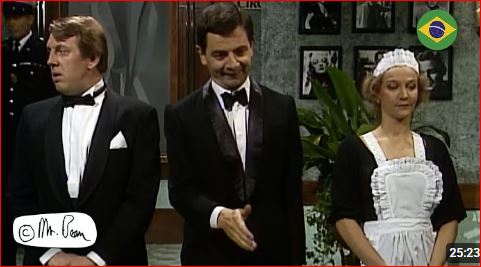
What Was First Idea Behind Mr Bean Series ? How It was so Popular and Succesfull?
Comedy Episodes of Mr. Bean: A 1200-Word Exploration
The comedy series Mr. Bean, created by Rowan Atkinson and Richard Curtis, remains one of the most iconic and universally loved shows in television history. First airing in 1990, the series featured a character so uniquely amusing that he transcended language, culture, and age. The episodes, built around the silent misadventures of a socially awkward yet oddly ingenious man, are now considered classics of physical comedy. This essay explores the nature of Mr. Bean’s humor, the structure of its episodes, and the memorable moments that established it as a global phenomenon.
The Essence of Mr. Bean’s Comedy
What makes the Mr. Bean episodes so distinctive is their reliance on visual comedy rather than dialogue. Bean rarely speaks, and when he does, it is usually in unintelligible murmurs. This silence centers the humor on exaggerated expressions, meticulous timing, and absurd problem-solving. In many ways, Rowan Atkinson channels the spirit of classic silent-era comedians like Charlie Chaplin and Buster Keaton, but with a uniquely modern twist. His comedy emerges from the tension between everyday situations and his unpredictable behavior.
Each episode is structured around simple, relatable tasks—getting ready for work, going shopping, visiting a restaurant—but these mundane activities transform into chaos because Bean approaches the world with childlike innocence and complete disregard for social norms. The resulting comedic situations are not only hilarious but also surprisingly insightful, as they reveal how fragile social conventions can be.
Iconic Episodes and Their Comedy Style
1. “Mr. Bean” (The First Episode)
The very first episode introduces the audience to Bean’s odd yet magnetic personality. One memorable sequence shows him preparing for an important exam. Surrounded by other test-takers who evidently studied, Bean attempts to cheat in increasingly desperate ways. His exaggerated attempts to peer at his neighbor’s paper—stretching, bending, and contorting—turn a simple academic setting into chaotic slapstick. The humor lies in his stubborn determination and utter lack of subtlety.
Later in the episode, Bean attends a church service. Trying to stifle yawns, stay awake, and quietly unwrap a sweet without making noise creates a series of awkward and hilarious moments. These scenes underline one of the recurring jokes in the series: Bean’s complete inability to behave appropriately in public places.
2. “The Return of Mr. Bean”
In this episode, Bean visits a department store, where his unpredictable behavior wreaks havoc on displays, mannequins, and other shoppers. The famous scene in which he tries on multiple suits of clothing without using a fitting room—simply stripping down in the middle of the store while cleverly hiding behind racks—perfectly captures his disregard for normal human boundaries.
The restaurant sequence in the same episode is another highlight. Bean orders a steak tartare, only to discover he hates it. Instead of sending it back, he conceals bits of the raw meat in anything he can find—sugar bowl, vase, bread roll, even a lady’s purse. The escalating desperation, paired with the audience’s anticipation of him running out of hiding places, makes the entire scenario delightfully absurd.
3. “The Curse of Mr. Bean”
This episode contains one of the most beloved scenes in the entire series: Mr. Bean at the swimming pool. He decides to jump from the highest diving board but quickly panics when he reaches the top. His exaggerated fear, combined with his failed attempts to climb back down as children mock him, results in a classic comedic moment when he ultimately falls off by accident.
The second half features Bean visiting a park, where he attempts to enjoy a quiet day but ends up confronting a mischievous boy and causing chaos while eating his lunch. His exaggerated attempts to impress or outwit a child play into the series’ frequent theme: Bean treats everything like a competition, even if no one else sees it that way.
4. “Mr. Bean Goes to Town”
This episode revolves around Bean’s struggles with modern (at the time) technology. One of the funniest sequences involves him trying to use a television, adjusting an aerial that only works when he is standing in impossible positions. The unpredictability of the signal becomes a source of comedy as Bean tries to freeze in different poses.
The episode also features Bean losing his wallet and attempting to catch a thief. His solution—pretending to be different people by changing hats and wigs—is both creative and ridiculous, showcasing the show’s emphasis on visual gags rather than verbal ones.
5. “Do-It-Yourself Mr. Bean”
Here, Bean celebrates the New Year with Teddy, his beloved stuffed pet. His party—consisting of a few snacks, silly hats, and a homemade countdown clock—is a wonderful example of his eccentricity. Later in the episode, he tackles home improvement, attempting to redecorate his flat. One of the funniest scenes involves him painting his walls by placing an explosive in a can of paint, expecting it to spread evenly. The resulting mess is pure slapstick genius.
6. “Back to School Mr. Bean”
In this episode, Bean visits a school open day. He unintentionally causes a chemistry disaster when he mixes chemicals he doesn’t understand, resulting in a small explosion. He also gets into trouble at an art class, where he destroys a beautiful statue and tries desperately to repair it in the worst ways possible.
This episode showcases the show’s ability to blend childlike playfulness with moments of unexpected chaos.
7. “Tee Off, Mr. Bean”
Bean’s visit to the golf course is a showcase of absurd determination. When his golf ball goes missing, he follows it through streets, shops, and even a car engine. The determination to finish a single round of golf creates a journey far more elaborate than the sport itself requires. This episode highlights the recurring comedic formula: Bean confronts a simple problem, then turns it into an adventure through sheer stubbornness.
Why Mr. Bean’s Comedy Endures
The episodes are timeless for several reasons. First, the humor requires no translation. Since Bean rarely speaks, audiences from any culture can understand the joke. His reliance on gestures, facial expressions, and situational comedy makes the show nearly universal.
Second, the show taps into basic human emotions: embarrassment, frustration, curiosity, and clumsy attempts to fit into society. People see aspects of themselves in moments when Bean struggles with simple things. The laughter comes not only from Bean’s ridiculousness but also from the recognition of our own awkwardness.
Third, the episodes are structured like modern fables. Bean’s actions are often selfish or thoughtless, yet there are consequences—sometimes immediate, sometimes delayed. Although he rarely learns from his mistakes, the audience does. His misadventures create a safe, humorous space to explore what happens when social norms are broken
==========